Entertainment Without the Rush
The modern holiday season is characterized by a frantic accumulation of events, leaving many of us emotionally and physically depleted before the main celebration even arrives. In our ongoing observations of domestic gatherings, we have noted a distinct paradigm shift: a movement toward entertainment without the rush. This approach repositions the home not as a staging ground for elaborate performances, but as a sanctuary for low-pressure connection.
The Principle of Opt-In Participation
One of the most persistent errors in seasonal hosting is mandatory participation. Whether it is a highly structured parlor game, a forced gift exchange, or a compulsory viewing of a specific film, demanding involvement invariably breeds resentment among those with lower social energy. The solution is the "opt-in" model. Set up a board game like Scrabble or Catan at a side table. Begin watching a classic like Charles Dickens' A Christmas Carol without announcing it as an absolute focal event. Allow guests to drift toward these activities organically. The success of an evening is measured by comfort, not universal compliance.
Redefining the Gathering Space
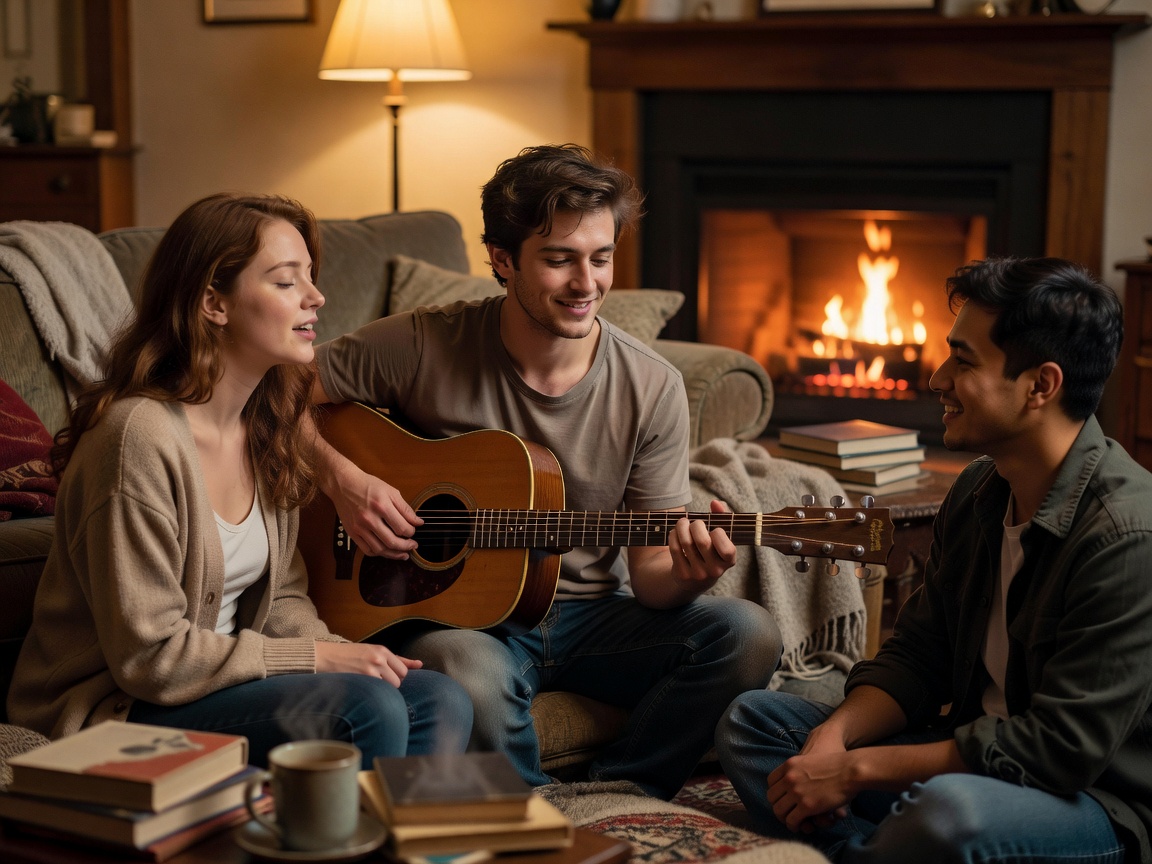
Physical environments dictate behavioral flows. If every chair is pointed directly at the television or organized in a rigid circle, it forces a specific kind of high-stakes interaction. By breaking the room into zones—a quiet corner for reading, a secondary space for quiet conversation, and a central area for more active engagement—you respect the varied needs of your group. Dimmed lighting, a crackling fire, or a strategically placed bowl of snacks act as natural anchors, drawing people together without formal instruction.
Simple Sensorial Anchors
Entertainment need not be an activity; often, it is an atmosphere. The slow preparation of a warm beverage—be it a rich hot chocolate or a spiced mulled wine (Glühwein)—serves as a communal focal point. The scent permeating the house and the shared ritual of passing mugs provide a structural rhythm to the evening. These small, sensorial anchors require minimal effort from the host while yielding profound comfort for the guests.
Embracing Domestic Imperfection
Fieldnote observations consistently reveal that guests remember the warmth of the host long after they forget the perfection of the decor. When a minor domestic catastrophe occurs—a burnt batch of biscuits or a dropped glass—it should be treated as an expected element of human gathering rather than a tragedy. Laughing through the mundane mishaps establishes a baseline of authenticity. It signals to everyone present that the priority is the people in the room, not a curated aesthetic.
Over-scheduling kills natural interaction. A rigid timeline prevents the deep, meandering conversations that only arise when people realize they have nowhere else to be.
Choosing to entertain without the rush is an act of quiet rebellion against seasonal frenzy. By cultivating a space that prizes ease over execution, you offer your guests the rarest of holiday gifts: the permission to simply exist alongside one another.